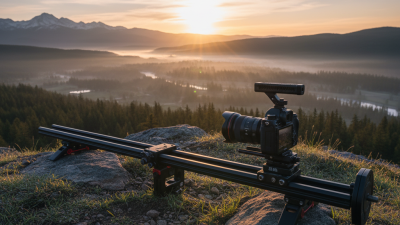
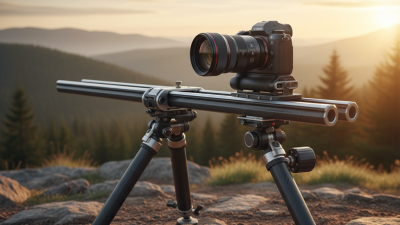
A Camera Slider Vertical gives filmmakers a controlled way to move upward or downward through a scene. It can reveal a character gradually, follow a product from table to face, or expose the height of an architectural space. The movement feels different from a pan or ordinary horizontal slide. It changes the viewer’s sense of scale. A slow rise can make a small room feel unexpectedly open. A careful descent can create tension beside a staircase, window, or workbench. Cinematographer Roger Deakins, ASC, BSC, often expresses the guiding principle this way: “The camera should be motivated by the story.” That idea matters more than owning expensive equipment.
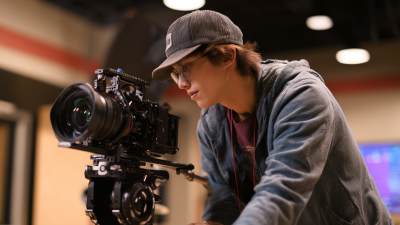
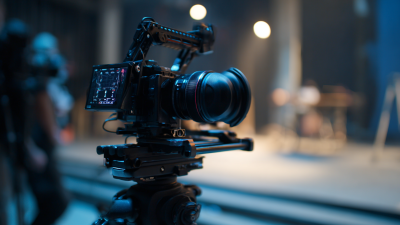
In practical shooting, a Camera Slider Vertical demands discipline. The rail must stand firmly, especially with a cinema camera, matte box, and monitor attached. Check the center of gravity before recording. Use a counterweight when the design requires it. Then move slowly. Small vibrations become obvious against straight walls and vertical doorframes. I have found that a shorter travel distance often looks more intentional than a dramatic climb. It also makes focus control easier. The shot may still fail if the background is empty or the subject has no emotional purpose. That is the uncomfortable part. Vertical movement can look impressive while saying very little. Test the shot at walking speed, then review it without sound. If the movement still communicates discovery, isolation, or scale, it probably belongs in the film. If not, a locked-off camera may be the more honest choice.
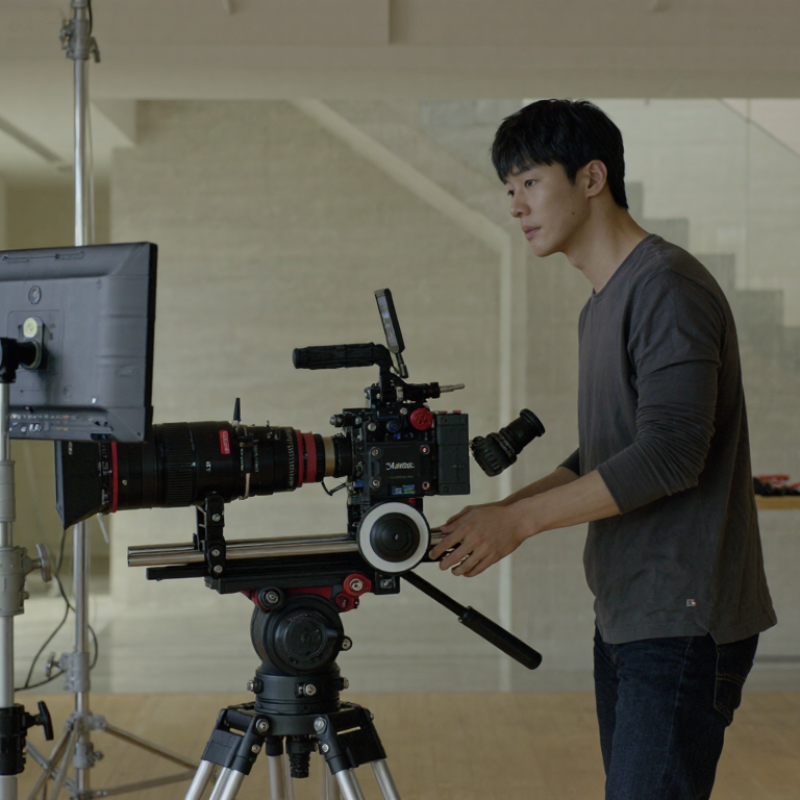
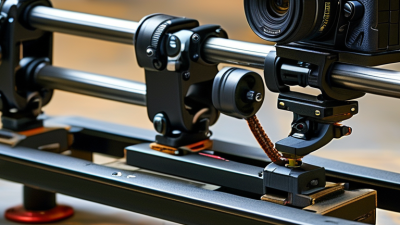
A vertical camera slider is a rail system that moves a camera upward or downward with controlled timing. Its core function is simple: create repeatable vertical motion while keeping the camera’s viewing direction stable. This differs from handheld lifting, where small shakes can distract viewers. The movement can reveal a subject, follow a performer, or create a slow rise above a table. Small movement matters.
In product filmmaking, a vertical slider can move from a label to the entire object without changing lens distance dramatically. That helps preserve framing and creates gentle parallax between foreground and background. For interviews, a short vertical move can add energy without making the shot feel excessive. The Motion Picture Association’s 2023 THEME Report valued the global theatrical and home/mobile entertainment market at 121.6 billion dollars. Such scale increases pressure for polished, reusable footage, but a slider does not automatically create professional results. Poor balancing can cause uneven speed, tilted horizons, or unsafe equipment shifts. I have found that slower movement often looks more intentional, though this assumption deserves testing for every scene. The operator should check rail alignment, camera weight, focus changes, and the end position before recording. A vertical slider works best when the motion supports the subject, rather than competing with it.
| Data Dimension | Typical Data or Range | Core Function | Filmmaking Benefit |
|---|---|---|---|
| Movement Direction | Vertical movement along an upward or downward axis | Moves the camera vertically while maintaining a controlled path | Creates rising, descending, reveal, and elevation-change shots |
| Common Travel Length | Approximately 40–100 cm for compact and studio-oriented systems | Defines the maximum distance available for the camera move | Longer travel provides more visible height change; shorter travel is easier to transport |
| Load Capacity | Often about 2–10 kg, depending on rail design, carriage, and orientation | Supports the camera body, lens, battery, monitor, and accessories | Higher capacity allows larger camera packages but usually requires stronger support |
| Mounting Orientation | Freestanding, tripod-mounted, wall-mounted, or rig-mounted | Positions the slider securely for a vertical camera path | Supports studio, location, tabletop, and architectural filming setups |
| Motion Control | Manual, motorized, or programmable movement | Controls travel speed, start-and-stop behavior, and repeatability | Motorized control improves consistency for product shots, time-lapse, and visual effects |
| Speed Range | From very slow cinematic movement to faster repositioning; exact limits vary by mechanism | Adjusts how quickly the camera travels along the vertical rail | Enables both subtle mood-building shots and energetic transitions |
| Camera Stability | Depends on rail rigidity, carriage design, counterbalance, and support structure | Reduces unwanted shake during controlled vertical travel | Produces smoother footage than handheld vertical movement |
| Counterbalance Requirement | Frequently needed for heavier camera packages or steep vertical setups | Helps prevent sudden carriage movement caused by gravity | Improves operator control and reduces motor strain or accidental drops |
| Camera Angle Options | Forward-facing, downward-facing, upward-facing, or angled configurations | Combines vertical travel with adjustable camera perspective | Expands creative options for interiors, products, food, nature, and portraits |
| Typical Shot Types | Reveal shots, vertical tracking, product elevation, parallax moves, and time-lapse | Adds deliberate camera motion to a fixed scene or subject | Makes scenes feel more dynamic without requiring a large crane or jib |
| Setup Time | Usually longer than a horizontal slider because vertical stability must be checked | Requires secure mounting, leveling, load testing, and cable management | Careful preparation improves safety and produces more repeatable footage |
| Portability | Compact systems may fit in a camera bag; longer or heavier systems need dedicated cases | Determines how easily the slider can be transported between locations | A lighter system is practical for travel and small crews |
| Best-Suited Production Scale | Small crews, studios, tabletop productions, interviews, and controlled locations | Provides repeatable vertical motion without a large camera crane | Offers a compact alternative when precise elevation movement is required |
| Primary Limitation | Requires secure support and careful weight management, especially when mounted vertically | Gravity increases the demands placed on the rail, carriage, motor, and mounting points | Correct setup is essential for smooth motion, equipment protection, and operator safety |
Note: Performance ranges are typical industry-use estimates. Actual travel length, payload, speed, and stability depend on the slider’s construction, support method, camera configuration, and operating angle.