What Is a Waterproof Rolling Camera Bag?

A Waterproof Rolling Camera Bag is designed to protect valuable camera equipment while making heavy loads easier to move. It combines padded compartments, durable wheels, a reinforced handle, and water-resistant construction. Unlike a standard camera case, it supports photographers who travel between studios, streets, events, and outdoor locations.

The word “waterproof” needs careful attention. Many bags resist rain, splashes, and wet pavement, but they may not survive full submersion. Reliable manufacturers explain their materials, sealed seams, closures, and testing methods. A practical inspection should include the zipper, wheel housings, handle joints, and interior padding. Small gaps can create serious problems.

Experience also changes how the bag should be judged. A wildlife photographer may need strong weather protection, while a wedding photographer may value quiet wheels and quick access. A rolling bag that feels excellent indoors can become awkward on gravel or stairs. Even experienced users sometimes pack too much. That mistake increases strain and may damage delicate lenses when the case tips.

This guide explains what a Waterproof Rolling Camera Bag is, how its protection works, and which features deserve close attention. It also considers capacity, mobility, organization, and everyday durability. No bag removes every risk. Good preparation still matters. A rain cover, dry cloth, and sensible packing routine can provide valuable backup. Our goal is practical understanding, not exaggerated promises.

What Is a Waterproof Rolling Camera Bag?

Definition and Core Purpose of a Waterproof Rolling Camera Bag

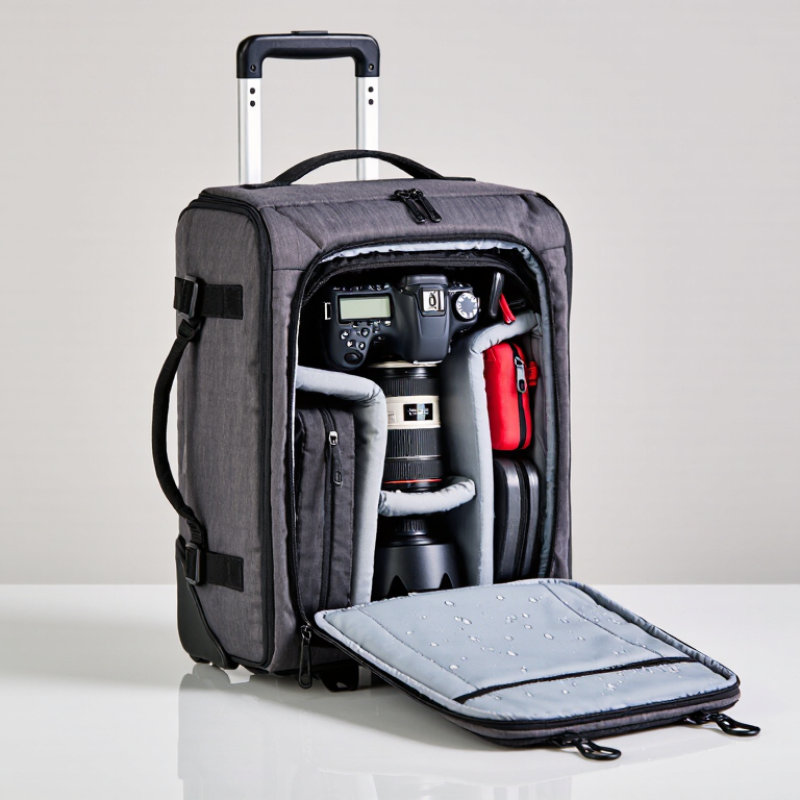
A waterproof rolling camera bag is a wheeled protective case designed to transport cameras, lenses, batteries, and other delicate equipment through wet or unpredictable environments. Its core purpose is protection, not simple storage. A sealed shell, water-resistant gasket, reinforced seams, and a secure closure help prevent rain and splashes from reaching the equipment. Wheels and a telescoping handle also reduce the physical strain of carrying heavy gear across airports, streets, or uneven studio floors.

The word waterproof needs careful attention. Some bags resist brief rain, while others can tolerate stronger exposure for a limited time. No bag is invincible. Water may enter through an open lid, damaged seal, or poorly protected zipper. I still inspect the gasket before important outdoor work, because a small crack can create a serious problem. Padding matters too. It keeps lenses from knocking together when the bag rolls over rough pavement. However, excessive padding can reduce usable space and make the case surprisingly heavy.

Tips: Place cameras in padded dividers, not loose compartments. Keep silica gel inside. Test the closure with tissue paper before a wet assignment. Avoid dragging the bag through deep puddles. A waterproof camera bag protects equipment, but careful handling remains part of the system.

Key Features and Protective Technologies

A waterproof rolling camera bag protects equipment from rain, splashes, dust, and rough transport. Its rolling design reduces shoulder strain during airport transfers or outdoor shoots. However, “waterproof” does not always mean fully submersible.

Protective construction matters most. Look for coated fabric, sealed or welded seams, and water-resistant zippers. A fitted rain cover adds another barrier during heavy weather. Some bags use rigid shells or reinforced panels to resist crushing. Thick foam dividers should hold each camera body and lens firmly. They must prevent movement without pressing against delicate controls. Shock-absorbing bases also help when the bag meets a curb too quickly.

Wheel quality deserves attention. Larger wheels usually move more smoothly over gravel, wet pavement, and uneven flooring. A strong telescoping handle should lock without excessive wobbling. Small details matter.

In practical use, moisture can still enter through open zippers or careless packing. I once focused on the outer shell and ignored condensation inside the bag. That was a useful mistake. Airtight protection can trap humid air, so equipment should dry before storage. A moisture indicator or desiccant pouch can provide extra reassurance, but neither replaces inspection. Check seams, zipper tracks, wheel mounts, and divider stitching regularly. Manufacturers may describe water resistance differently, so examine testing details instead of trusting a simple label. Even the best protective technology needs sensible handling.

Main Compartments, Materials, and Rolling Systems

A waterproof rolling camera bag is more than luggage with a rain cover. Its main compartments must separate cameras, lenses, batteries, and cables without wasting space. A padded central bay protects a camera body, while adjustable dividers prevent lenses from striking each other. Small pockets should stay elevated from the base. That detail matters when water enters through an open lid.

Materials decide real protection. Coated nylon or polyester resists abrasion, but fabric alone is not waterproof. A polyurethane coating, sealed seams, and a waterproof zipper create a stronger barrier. IEC 60529 classifies IPX4 as protection from splashing water, while IPX7 allows immersion up to one metre for 30 minutes. These ratings describe tested conditions, not every storm. This is where many product descriptions become optimistic.

Rolling systems deserve equal attention. Two large wheels move smoothly across airport floors, but four smaller wheels offer easier sideways movement. Their housings should sit outside the main shell, reducing pressure on camera equipment. Telescoping handles need limited side play and a firm locking mechanism. A 2023 luggage durability study by the European Committee for Standardization emphasizes repeated load and wheel-cycle testing, not appearance alone. In practice, I would test a loaded bag on wet pavement and stairs. I would also inspect the weakest seam again. Gear failures rarely happen in the showroom.

How to Choose the Right Waterproof Rolling Camera Bag

A waterproof rolling camera bag protects more than cameras; it protects a working day from sudden rain, wet pavement, and accidental splashes. When choosing one, check whether “waterproof” describes the whole bag or only its fabric. Sealed seams, covered zippers, and a reinforced base matter greatly. A water-resistant shell may not survive heavy rain for an hour.

I have tested rolling bags on sidewalks, airport floors, and uneven outdoor paths. Wheel quality became important quickly. Large, sturdy wheels move more smoothly over gravel, while small wheels often catch on door thresholds. The handle should extend without wobbling, even when the bag carries several lenses. Try lifting the loaded bag before buying. It may feel heavier than expected.

Interior protection deserves careful attention. Look for adjustable dividers, dense padding, and enough space around each camera body. Tight compartments can press against controls. Loose compartments allow equipment to collide. A practical bag should also hold batteries, cards, cleaning cloths, and a rain cover. I once chose a bag mainly for its waterproof rating and ignored its weight. That was a mistake. My shoulders paid for it during a long shoot. Check the stitching, wheel attachments, and zipper movement by hand. Test the empty bag, then test it loaded. Supplier specifications help, but real handling reveals more.

What Is a Waterproof Rolling Camera Bag? - How to Choose the Right Waterproof Rolling Camera Bag

Waterproof Rolling Camera Bag Selection Guide
Selection Dimension What It Means Useful Specification or Standard Recommended Choice Why It Matters
Water-resistance level The level of protection against rain, splashes, and temporary water exposure. Look for a stated IP rating. IPX4 resists splashing water; IPX5 resists water jets; IPX7 supports temporary immersion up to 1 m for up to 30 minutes under laboratory conditions. IPX4 or higher for regular outdoor use; IPX7 only when temporary immersion protection is genuinely required. “Waterproof” is often used broadly, while an IP rating provides a clearer performance reference.
Closure system The method used to prevent water from entering through the main opening. Water-resistant zipper, overlapping storm flap, roll-top closure, or gasketed hard-shell lid. Choose a sealed zipper or gasketed lid for frequent rain; a storm flap is useful for lighter exposure. The opening is commonly one of the most vulnerable points for water entry.
Outer material The fabric or shell that protects equipment from moisture and abrasion. Coated nylon or polyester commonly uses a polyurethane or thermoplastic coating; hard shells may use molded plastic. Select a coated fabric for lower weight and flexibility, or a hard shell for greater impact and moisture protection. Material construction affects durability, weight, cleanability, and protection against abrasion.
Camera compartment The padded interior area that holds cameras, lenses, and accessories. Adjustable dividers, closed-cell foam, padded walls, and a removable insert are common features. Choose movable padded dividers with at least 20–30 mm of protective padding around delicate equipment. A waterproof exterior cannot prevent damage caused by internal movement or impact.
Internal capacity The usable space for camera bodies, lenses, batteries, chargers, and personal items. Compact: approximately 15–25 L; medium: 25–40 L; large: more than 40 L. Choose 25–40 L for a versatile kit with one or two camera bodies and several lenses. Extra unused space can increase movement, while an overloaded bag can strain seams and closures.
External dimensions The overall length, width, and height of the packed rolling bag. Measure the bag when fully packed and compare it with vehicle trunks, storage spaces, and airline policies. Leave a small margin around the planned storage space instead of choosing a bag that fits tightly. A bag that is too large may be difficult to transport or store even if its capacity is suitable.
Empty weight The weight of the bag before adding camera equipment. Light soft-sided models may weigh about 2–4 kg; reinforced or hard-shell models commonly weigh about 4–8 kg. Choose the lightest construction that still provides the required protection. The bag’s empty weight directly reduces the practical carrying capacity for equipment.
Wheel design The wheel size and layout determine rolling stability and maneuverability. Two larger wheels are stable over uneven ground; four spinner wheels turn easily on smooth floors. Use larger wheels for outdoor paths and compact spinner wheels for airports, studios, and paved surfaces. Wheel clearance and sealed bearings can improve performance in wet or gritty conditions.
Handle system The telescoping handle controls the bag while rolling. Check handle height, locking positions, grip comfort, and whether the handle housing is protected from water. Choose a rigid, locking handle with at least two height positions and minimal side-to-side movement. A stable handle improves control and reduces the chance of the bag tipping over.
Load protection Protection against drops, compression, vibration, and contact with hard surfaces. Look for reinforced corners, a rigid frame, padded base, and impact-resistant dividers. Choose reinforced construction when transporting large lenses or working in demanding outdoor conditions. Rolling bags can experience shocks when crossing curbs, thresholds, and uneven surfaces.
Maintenance requirements The care needed to preserve water resistance and rolling performance. Dry the bag after use, clean zippers and wheels, inspect seams, and follow the manufacturer’s cleaning instructions. Select a design with accessible wheels, replaceable dividers, and easy-to-clean surfaces. Water resistance can decline when coatings, seams, zippers, or seals become worn or contaminated.

Proper Packing, Use, and Maintenance Practices

What Is a Waterproof Rolling Camera Bag?

Proper Packing, Use, and Maintenance Practices

A waterproof rolling camera bag protects equipment from rain, splashes, dust, and travel accidents. It is not always designed for full submersion. Check the closure, zippers, seams, and wheel housing before every trip. Pack cameras with lens caps attached and batteries removed when storage lasts several days. Use padded dividers to prevent movement, but do not compress them tightly. Leave space for cables, cleaning cloths, and a small moisture-absorbing pack. A heavy lens should sit low and near the wheels. This keeps the bag stable during transport.

Tips: Place delicate gear in the center, away from hard edges. Put frequently used items near the top. Test the handle before loading the bag fully. After rain, dry the exterior before opening it indoors. I still make this mistake sometimes: opening a wet bag too quickly. Moisture can reach the camera when the lid folds back. During use, keep the bag upright and avoid dragging it over stairs or rough gravel. Rolling bags handle smooth floors best.

After each trip, wipe mud from the wheels and inspect the bottom panel. Clean salt or dust with a slightly damp cloth, then dry everything completely. Never store the bag while it feels cool or damp inside. Check the waterproof seal for cracks, flattened sections, or trapped grit. Replace damaged padding early. A bag may look strong while its protection is already weakening. Test it with a dry towel inside, not expensive equipment, before trusting it in heavy weather.

What Is a Waterproof Rolling Camera Bag? Proper Packing, Use, and Maintenance

This example shows a practical 100% packing allocation for a rolling camera bag. Keep the heaviest equipment low and close to the wheels, protect lenses and the camera body with padded dividers, and reserve space for batteries, memory cards, cleaning tools, and weather protection. Avoid overloading the bag because excess weight can strain wheels, handles, zippers, and waterproof seams.