What is a Portable Camera Tripod and How to Choose One?
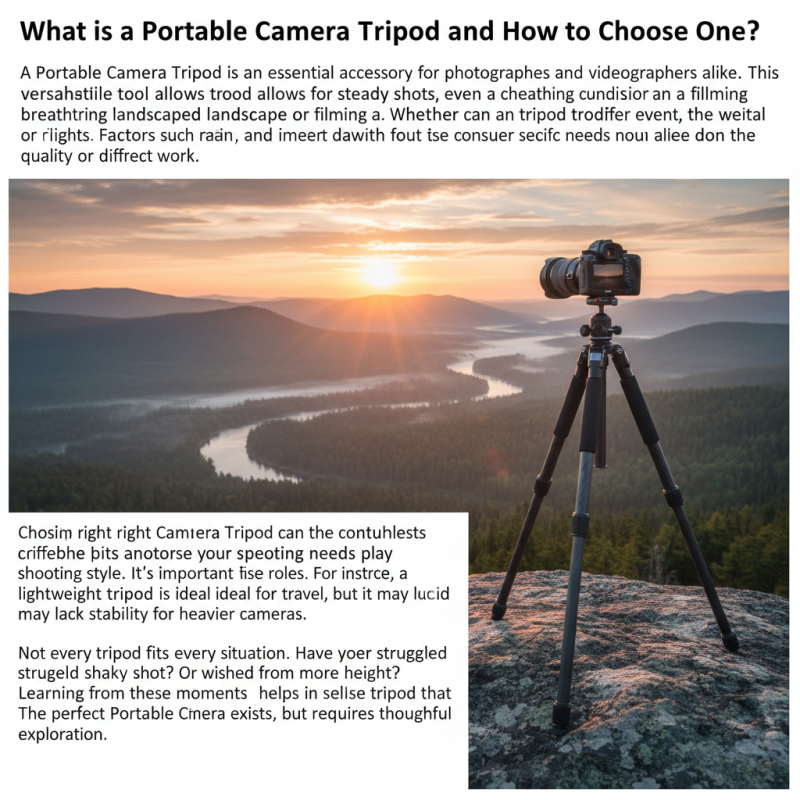
A Portable Camera Tripod is an essential accessory for photographers and videographers alike. This versatile tool allows for steady shots, even in challenging conditions. Whether you are capturing a breathtaking landscape or filming an event, a tripod can make all the difference in the quality of your work.
Choosing the right Portable Camera Tripod can be overwhelming due to the countless options available. Factors such as weight, height, and material play critical roles. It's important to consider your specific needs and shooting style. For instance, a lightweight tripod is ideal for travel, but it may lack stability for heavier cameras.
Not every tripod fits every situation. Reflecting on your past experiences can guide your decision. Have you ever struggled with a shaky shot? Or wished for more height? Learning from these moments helps in selecting a tripod that complements your photography journey. The perfect Portable Camera Tripod exists, but it requires thoughtful exploration.
Understanding Portable Camera Tripods: Definition and Features
Understanding Portable Camera Tripods: Definition and Features
A portable camera tripod is a supportive device for cameras. It stabilizes your shots and helps capture clear images. Lightweight and easy to carry, these tripods are perfect for travel. They come in various heights, materials, and designs to suit different needs. An adjustable leg and quick-release plate add convenience.
When choosing a tripod, consider the materials. Aluminum is sturdy and affordable. Carbon fiber is lightweight and durable but tends to be pricier. Think about the weight capacity as well. Heavier cameras require more stability. Test the height adjustments before making a decision. A tripod should meet your preferred shooting angle.
Tips: Always check the leg locks. Loose locks can lead to falls. A rubber grip offers better stability on different surfaces. If photography is your passion, invest time in finding the right tripod. A good choice enhances your shooting experience. Don't rush the selection process; every detail matters.
Types of Portable Camera Tripods: An Overview of Options Available
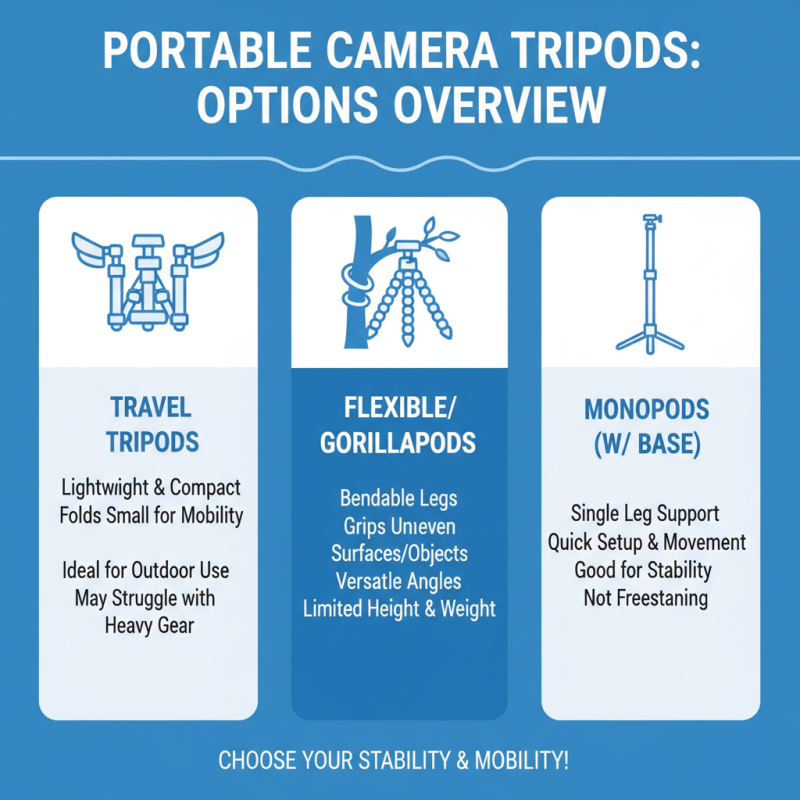
When looking for a portable camera tripod, understanding the types available can be crucial. There are several options, each with unique features. Travel tripods are lightweight and compact, designed for mobility. They often fold down small and are easy to carry. These can be great for outdoor photography, but might struggle with heavier equipment.
Another popular type is the mini tripod. These small gears are excellent for table-top setups. They are perfect for vlogging or capturing product shots. However, their stability can be an issue with windy conditions. If you need versatility, consider a flexible tripod. These can bend and wrap around objects. They offer creative angles, but setting them up can be tricky. Each type has strengths and weaknesses.
Reflect on your specific needs when choosing. Portable does not always mean sturdy. Look for a tripod that balances weight with build quality. Ask yourself how you will use it. Understanding these differences will guide you toward an informed decision.
Key Factors to Consider When Choosing a Portable Camera Tripod
When selecting a portable camera tripod, several key factors must be considered. The tripod's weight and material play a significant role in portability. Aluminum and carbon fiber tripods are popular because they balance weight and stability. A heavier tripod can be more stable but less convenient to carry.
Height is another important aspect. A tripod should extend high enough for comfortable shooting angles but also compact for easy transport. Look for models with adjustable leg sections to maximize flexibility. A good tripod often includes a quick-release plate for fast camera attachment and detachment.
Tips: Check the load capacity. Make sure it can support your camera and accessories. Stability matters, especially in windy environments. Some tripods can wobble, leading to blurry photos. Don't overlook leg locks; twist locks tend to be faster but may wear out over time. Finally, test the tripod before buying. Each model feels different, and personal comfort is essential.
How to Properly Set Up and Use Your Portable Camera Tripod
Setting up a portable camera tripod correctly is essential for achieving stable and professional-looking shots. Start by selecting a flat surface. Uneven ground can lead to shaky images. Next, extend the legs evenly. Avoid extending just one leg to maintain balance. Use the bubble level if your tripod has one. Achieving a level shot can make all the difference in your photography.
When you attach your camera, do so carefully. Ensure it’s secure but don’t overtighten. An improperly secured camera may fall. Adjust your tripod height to match your subject. Knee-level shots can create unique perspectives. However, don’t forget to experiment with angles. Sometimes, the best shots come from unexpected positions.
Using a tripod also means practicing patience. Take your time to compose your shot rather than rushing. Remember to double-check your settings. Camera settings play a crucial role in photo quality. A little attention to detail can help you avoid frustrating mistakes later. Ultimately, mastering your tripod setup can enhance your photography skills significantly.
What is a Portable Camera Tripod and How to Choose One? - How to Properly Set Up and Use Your Portable Camera Tripod
| Feature |
Description |
Considerations |
| Material |
Common materials include aluminum, carbon fiber, and plastic. |
Aluminum is affordable but heavier; carbon fiber is more expensive but lightweight. |
| Weight Capacity |
The maximum weight the tripod can safely hold. |
Ensure it can accommodate your camera and any additional gear. |
| Height Range |
The minimum and maximum heights the tripod can achieve. |
Choose a tripod that suits your shooting style, i.e., low angle or high shots. |
| Leg Sections |
The number of segments in each leg of the tripod. |
More sections allow for compactness but may reduce stability. |
| Head Type |
The mechanism for holding and adjusting the camera, such as ball head or pan-tilt head. |
Ball heads are versatile; pan-tilt heads offer more precision. |
| Portability |
How easy it is to carry the tripod. |
Look for lightweight and compact designs if traveling. |
| Price Range |
Cost can vary from budget to premium options. |
Determine your budget while considering quality and durability. |
Maintenance Tips for Extending the Life of Your Camera Tripod
Maintaining your camera tripod is crucial for longevity and consistent performance. Regular maintenance can prevent wear and tear, ensuring it serves you well for years. According to industry reports, a well-cared-for tripod can extend its lifespan by up to 50%.
To keep your tripod in top shape, regularly check for dirt and debris. A damp cloth can remove grime. Pay attention to the leg locks and joints; they should function smoothly. If you notice any stiffness or slippage, this may indicate that cleaning or lubrication is necessary. Regular inspections help catch small issues before they turn into significant problems.
Tips for tripod care include storing it properly. Avoid leaving your tripod in extreme temperatures. Prolonged exposure to moisture can also lead to corrosion. Some reports suggest that 30% of tripod defects stem from environmental damage. Consider using a protective bag when traveling. Also, always tighten the knobs and screws before packing it away. These simple practices can greatly enhance reliability.