How to Choose the Best Camera Slider Stand for Your Needs?
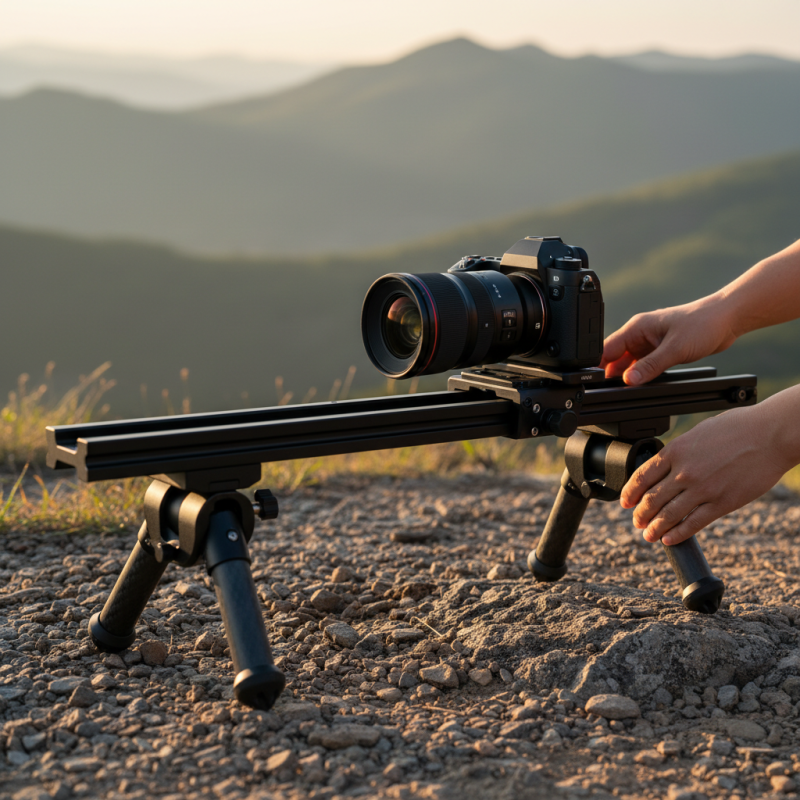
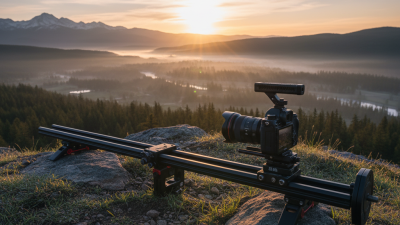
Choosing the right camera slider stand is crucial for capturing stunning visuals. A camera slider stand can significantly enhance your filming capabilities. It allows for smooth, controlled movements, bringing your shots to life.
When selecting a camera slider stand, consider your specific filming needs. Not all sliders are created equal. Some are lightweight and portable, while others are more robust for studio use. Think about the weight of your camera and the types of shots you wish to create.
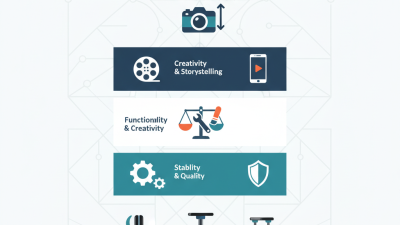
Many filmmakers overlook the importance of stability and adjustability in a slider. A stable slider reduces the risk of shaky footage, which can ruin a great shot. It's worth investing time in research and testing various options. Remember, the ideal slider for you might not be the most expensive or feature-rich. Reflect on your experience and what truly matters for your projects.
Understanding Different Types of Camera Sliders: A Comparison
When selecting a camera slider, it's crucial to understand the different types available. Generally, camera sliders fall into three categories: manual, motorized, and electric sliders.
Manual sliders are the most straightforward. They offer basic movement control but lack advanced features, limiting potential creativity. While they might suit beginners, experienced videographers often desire more robust tools.
Motorized sliders bring technology into play. They allow for smooth, precise movements, which can be essential for professional shots. Reports show that around 65% of filmmakers prefer motorized options for their consistency and reliability. Yet, these sliders can be costly and require more setup time. The dependency on batteries raises concerns about failure during shoots.
Electric sliders provide automation but can be overly complex. These often include programmable settings for specific movements, catering to narrative-driven projects. However, this complexity can intimidate some users, potentially leading to frustration. Although electric sliders can yield breathtaking results, they necessitate a learning curve that isn't always worth it for casual shooters. Making choices hinges on understanding each type’s advantages and drawbacks.
Key Features to Consider in a Camera Slider Stand: Stability and Capacity
When choosing a camera slider stand, stability is crucial. A stable stand prevents shaking during shots. This ensures smooth, professional-looking videos. Look for stands with a solid base and robust materials. They should withstand wind and movement. Metal constructions often provide better stability than plastic options.
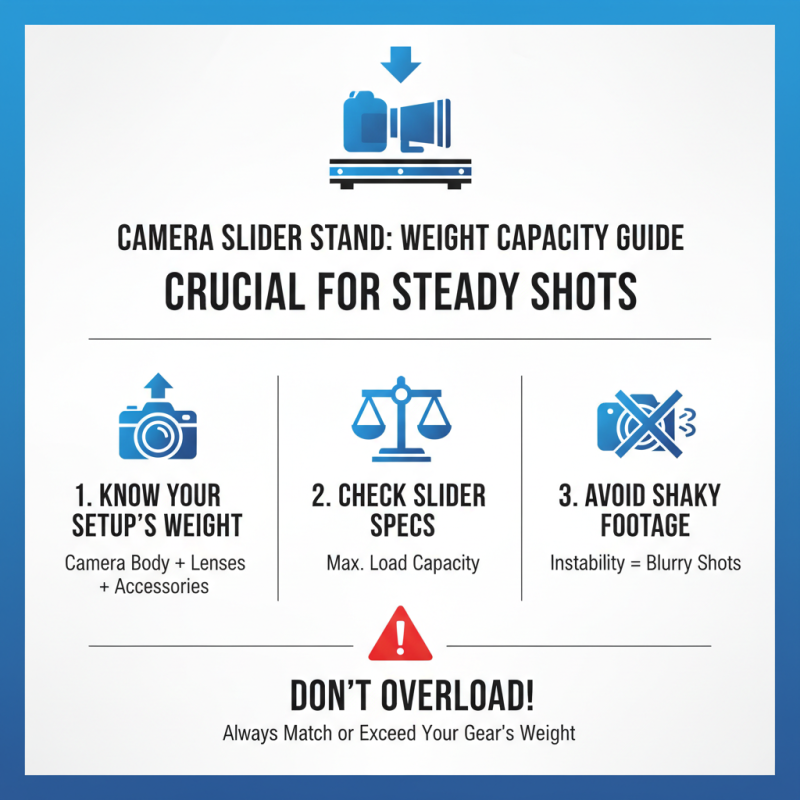
Capacity is another key feature to examine. Consider the weight of your camera and any additional gear. The slider should support that weight comfortably. An underloaded slider might give shaky results. On the other hand, an overloaded one can break or malfunction. A balance is essential.
Reflect on the environment where you'll use the slider. Outdoor shoots may require more stability due to uneven surfaces or wind. Indoor settings might allow for lighter stands. Pay attention to the maximum load capacity. Each shoot demands different equipment. Tailoring your choice to your needs can make all the difference.
Camera Slider Stand Comparison: Stability vs. Load Capacity
Assessing Load Capacity: How Weight Affects Slider Performance
When it comes to choosing a camera slider stand, weight capacity is crucial. A slider that can’t handle your camera’s weight can lead to shaky shots. It’s essential to know your camera’s weight. Always check the specifications of your setup. You might be surprised at what an extra lens adds.
Consider the materials used in the slider stand. Heavier stands often provide stability. However, they can also be cumbersome to transport. Think about your shooting environment. If you're shooting on location, a lighter stand may be necessary. But if you’re working in a studio, you might prefer a sturdier option.
Keep in mind that adding accessories increases weight. A microphone or lights can improve your shoot but may exceed the stand's capacity. It's important to balance functionality and performance. Sometimes, compromising on a few features can enhance overall stability. Assess your needs carefully. This can save you headaches in the long run.
Portability vs. Durability: Finding the Right Balance for Your Needs
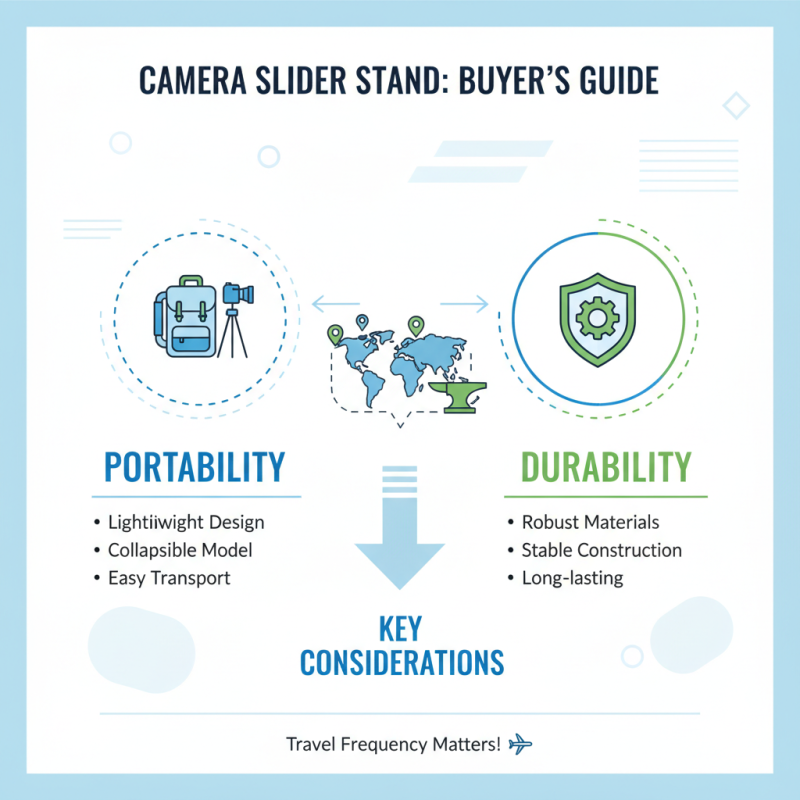
When choosing a camera slider stand, you must consider portability and durability. Portability is crucial for those on the move. A lightweight slider is easier to transport. If you often shoot in various locations, a collapsible model is ideal. It fits nicely in a backpack and won’t weigh you down. Consider how frequently you travel. Many options excel in this area.
On the other hand, durability shouldn't be overlooked. You want a slider that can withstand rough use. Sturdy materials are essential, especially if you work in outdoor environments. Risk of damage is high in such settings. A slider that feels solid and reliable can make a difference. Some products may seem lightweight but lack long-term durability.
Finding the right balance is a challenge. A durable slider can be heavy and cumbersome. A portable one may not provide the stability required for smooth shots. Each choice has its drawbacks. Think carefully about what matters most in your work. Sometimes, a compromise is necessary. Reflect on your priorities, and choose wisely.
Budgeting for Quality: The Cost-Effectiveness of Different Slider Brands
When selecting a camera slider stand, budget often plays a crucial role. Different brands offer a range of prices, which can be overwhelming. Quality doesn't always mean spending a fortune. Some affordable options perform surprisingly well. Focus on features that matter to your specific needs rather than the brand name.
Consider durability and portability. A well-built slider doesn't have to break the bank. Look for materials that balance weight and strength. Many budget-friendly sliders are made from aluminum or reinforced plastic. They can withstand regular use in various conditions. Reflect on your shooting style and frequency. If you're a casual user, higher-end models may be unnecessary.
Think about maintenance. Some options require more upkeep than others. A budget slider might need extra care to stay functional. A more expensive one may offer warranties and customer support, which can save money in the long run. It’s important to weigh these factors carefully. Expensive isn't always better; value comes from how well a product meets your requirements.
Camera Slider Stand Comparison
| Feature |
Entry Level |
Mid Range |
Professional |
| Price Range |
$50 - $150 |
$150 - $500 |
$500+ |
| Max Load Capacity |
5 lbs |
10 lbs |
30 lbs |
| Material |
Plastic/Aluminum |
Aluminum |
Carbon Fiber/Aluminum |
| Length |
24 inches |
36 inches |
48 inches |
| Stability |
Basic |
Moderate |
High |
| Ease of Use |
Beginner-Friendly |
Intermediate |
Proficient |