Best Shockproof Camera Case 2026 Which One to Buy?

Camera protection rarely feels urgent until a camera hits concrete. A cracked screen, shifted lens, or wet memory card can turn a routine outing into an expensive repair. The right Shockproof Camera Case adds a practical buffer, but “shockproof” is not a universal promise. Protection depends on the case design, padding, closures, and the height and angle of impact.

The Camera & Imaging Products Association (CIPA) reported approximately 8.5 million digital cameras shipped worldwide in 2024. That figure reflects a substantial ecosystem of equipment worth protecting, though it does not measure demand for protective cases. Photographer Chase Jarvis’s well-known line, “The best camera is the one that’s with you,” offers a useful reminder: gear needs to travel. His quote is not specifically about cases, and that distinction matters. A padded bag can reduce everyday knocks; it cannot guarantee survival in every fall.

This guide compares case styles, materials, fit, and realistic protection claims. It also considers access, weather resistance, and room for spare batteries. Small details count. A loose divider can let a lens strike the camera body. Lab tests help, but real drops are messy. There is no perfect case for every photographer. The goal is a reliable match for your camera, your route, and the risks you actually face.
Best Shockproof Camera Case 2026 Which One to Buy?

What a Shockproof Camera Case Protects: Impacts, Dust, and Water

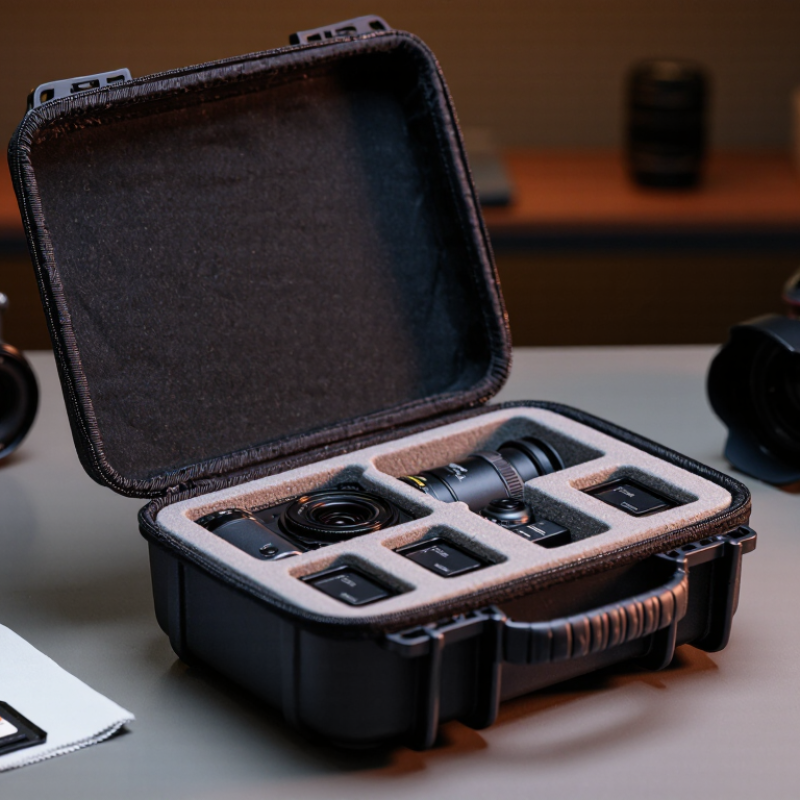
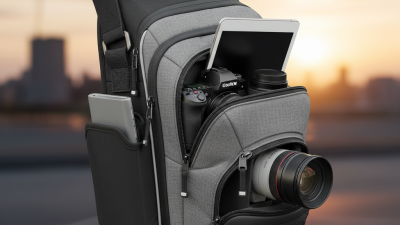
A shockproof camera case helps soften knocks from everyday handling: a camera slipping off a car seat, bumping a doorway, or shifting inside a packed bag. Padding works best when the camera fits snugly and does not rattle. Reinforced corners can absorb some force, but they cannot prevent every cracked screen or damaged lens. That distinction matters. A thick case may feel reassuring, yet poor fit can let equipment move around inside.

Dust protection depends on close-fitting seams, covered zippers, and clean closures. Fine grit can settle around buttons and lens mounts, so wipe the case before opening it in a dusty place. Water resistance varies widely. A splash-resistant shell may handle light rain, while a waterproof design needs dependable seals and properly closed latches. Check the stated rating and inspect seals for wear. I still find the closure easy to overlook. No case replaces careful handling, and protection can weaken after repeated drops or rough travel. A case that suits your camera and usual conditions is more useful than one that simply looks rugged.
How IEC 60529 Rates Dust and Water Protection for Camera Cases

When comparing a shockproof camera case, read its IP code as carefully as its padding. IEC 60529 classifies protection against solid particles and water ingress. The first digit describes solids; the second describes water. An “X” means that category was not rated, not that the case failed. That matters.

For dust, IP5X allows limited dust entry under test conditions, while IP6X is dust-tight during testing. For water, IPX4 indicates resistance to splashing; IPX7 covers temporary immersion under specified laboratory conditions. These ratings do not prove protection against every downpour, surf spray, or repeated dunking. Test depth and duration matter. Don’t guess.

Look for the complete rating and test details, not just a vague “waterproof” claim. An IP67 case may suit dusty trails and accidental brief submersion, but inspect its seals before a trip. Sand near a zipper, a pinched gasket, or a cracked corner can affect real-world protection. IEC 60529 measures ingress protection, not impact strength, cushioning, or long-term wear. I still find these labels easy to overread. Treat them as useful evidence, then check the latch and seams yourself.

Best Shockproof Camera Case 2026: Which One to Buy? — How IEC 60529 Rates Dust and Water Protection

Use this comparison to match a case design to your shooting conditions. IEC 60529 classifies protection against dust and water; it does not assign a shockproof or drop-protection rating.

Case Type Best Suited For Dust and Water Rating to Look For Shock-Protection Checks Key Buying Considerations
Padded soft case Everyday carrying, light bumps, and keeping a camera separate from other items in a bag. Often unrated. If the case has a verified IP code, check what the complete case protects against. Inspect padding thickness, closed-cell foam or equivalent cushioning, and protection around corners. Choose a snug fit with a secure closure. Soft padding is useful for minor impacts but should not be treated as a tested drop rating.
Reinforced semi-rigid case Travel and regular outdoor use where the case may be squeezed or knocked. Do not infer an IP rating from a water-resistant fabric or zipper; look for a documented rating for the assembled case. Check the shell structure, internal cushioning, closure security, and any published impact-test method and results. A practical middle ground for users who want more structure than a soft pouch without a bulky hard shell.
Hard-shell protective case Rough transport, equipment storage, or environments where dust and water exposure are possible. IP5X: dust-protected, but dust ingress is not completely excluded. IP6X: dust-tight. Look for documented drop or impact testing, the test method, drop height, impact surfaces, and whether the case was tested loaded. Check that latches stay closed, the camera is restrained by suitable padding, and any seal is intact and replaceable if needed.
Sealed case for wet or dusty conditions Activities where rain, splashes, dust, or temporary immersion are credible risks. IPX4: protection against water splashing from any direction. IPX5: protection against water jets. IP67: dust-tight and tested for temporary immersion up to 1 m for 30 minutes under specified test conditions. Water and dust ratings do not establish impact resistance. Verify shock protection separately and check whether the seal is compatible with the intended use. Confirm the rating applies to the complete case, including its closures and ports, and follow the manufacturer’s limits for depth, time, and maintenance.
Case rated IP68 Use in conditions requiring immersion beyond the IP67 test conditions, when the specified limits match the planned activity. IP68: dust-tight and protected against immersion under conditions specified by the manufacturer; the depth and duration are not a single universal value. Seek separate, documented impact or drop-test information. IP68 alone says nothing about shock resistance. Read the exact depth, duration, and test conditions. Do not assume an IP68 case is suitable for every underwater activity or pressure level.
Protective case with separately tested impact performance Work, travel, or outdoor activities where drops and impacts are a primary concern. Choose an IP rating based on the actual dust and water exposure; impact testing does not establish an IP rating. Look for a named test method, such as IEC 60068-2-27 for shock testing, or a clearly specified drop-test protocol. Review the test conditions and results. Check whether the camera itself was protected during testing and whether the tested setup matches the case, insert, and equipment you plan to use.

How to choose: For dust-tight protection, look for IP6X as part of the full IP code. For temporary immersion up to 1 m for 30 minutes under IEC 60529 test conditions, IP67 is the relevant code. For drop protection, require separate impact-test evidence. An IP rating describes specified ingress tests, not a guarantee against every real-world exposure.

What IP67 Means: Dust-Tight and 1 m Immersion for 30 Minutes

An IP67 camera case combines two useful protections. The “6” means the enclosure is dust-tight under the rating test. The “7” means it can withstand immersion in up to one metre of water for 30 minutes under controlled conditions. That can help during a sudden downpour or an accidental drop into shallow water. It is not a promise of protection in every situation. Saltwater, strong currents, temperature changes, and worn seals can affect performance. One metre sounds reassuring, but waves can add force.

Tips: Check the gasket for grit or cracks, then close every latch firmly. A tiny grain can matter. Keep the case shut while wet, and follow its care instructions after saltwater exposure.

When comparing cases, confirm that the rating applies to the complete case, not just one component. Check that your camera fits and that buttons, lens openings, and controls remain usable. Shock resistance and water resistance are separate qualities, so look for impact-test details too. A rating can guide a purchase, but it cannot replace careful inspection. Even a new case may need a little attention before each outing.

IP67 Protection: What the Numbers Mean

IP67 combines two separate protection ratings: the first digit, 6, indicates a dust-tight enclosure; the second digit, 7, indicates protection against temporary immersion in water up to 1 metre for 30 minutes under specified test conditions. IP67 describes dust and water protection, not shock resistance.

How MIL-STD-810H Method 516.8 Tests Mechanical Shock

MIL-STD-810H Method 516.8 evaluates mechanical shock under defined test conditions. It is not one universal drop test. The procedure can involve different shock pulses, directions, and mounting arrangements, depending on the equipment’s expected use. A case may be secured to a test fixture, exposed to controlled impacts, and checked for damage or loss of function.

Details matter. A report should identify the test procedure, impact severity, and whether the camera was inside the case. It should also say what was inspected afterward: cracked corners, a loose latch, shifted padding, or a camera that no longer operates. A passing result applies to that setup, not every fall onto every surface. That distinction is easy to miss.

When comparing cases, ask for the actual test conditions rather than relying on “military-grade” wording. Check whether the test reflects your risks, such as a short fall onto concrete or repeated jolts in a packed bag. Even a careful test has limits. It cannot predict every real-world impact, and a case that performs well in a lab may still be awkward to close or inspect. I would treat the standard as useful evidence, not a promise of invulnerability.

How to Choose a 2026 Case by Fit, Test Ratings, and Price

A shockproof camera case should fit your exact camera model, not just its general size. Check the body dimensions, lens clearance, and access to buttons, ports, and battery doors. A case that presses against a zoom control can become annoying quickly. The fit should feel secure without forcing the camera inside. Small details matter.

Test ratings are useful only when you know what was tested. Look for drop height, surface type, number of drops, and whether the case was tested with a camera inside. A rating without test conditions tells you little. Compare materials and closure design, too: firm padding and a secure latch may protect better than a bulky shell with loose corners. Price should reflect practical protection, not dramatic claims. I still find fit easy to overlook when comparing features.

Tips: Measure your camera before ordering. Check return terms in case the fit is wrong. Read recent owner feedback for repeated issues, such as cracked clips or difficult access. A slightly imperfect fit can be a deal-breaker.